

Telehealth is the use of technology (computers, smartphones, or tablets) to provide healthcare services remotely. Telehealth does not include communication between a provider and a member that consists solely of an email, text, or fax transmission.
It allows patients to connect with healthcare providers for appointments, consultations, and follow-up care without having to visit a clinic or hospital in person. This approach improves access to medical care, especially for those in rural or underserved areas.
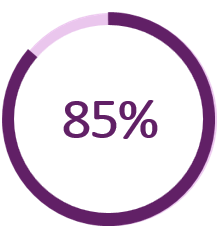
According to a 2022 survey published by the American Telemedicine Association, up to 85% of providers reported that telehealth allowed them to sustain or improve the continuity of their relationships with patients, even in rural or remote areas. This indicates a significant positive impact in maintaining engagement and care consistency through virtual visits.

Telehealth services must be delivered with sufficient quality as to be the same level of service as an in-person visit. Transmission of voices, images, data, or video must be clear and understandable.
Health care services include:
Please note: Telehealth does not replace provider choice and/or member preference for in-person service delivery.
There are no limitations on what provider types may be reimbursed for telehealth services.
Out-of-State Providers are required to enroll in Wisconsin Medicaid.
Providers who meet the definition of a border-status provider as described in Wis. Admin. Code § DHS 101.03(19) and who provide services to Wisconsin Medicaid members only via telehealth, may apply for enrollment as Wisconsin telehealth-only border-status providers if they are licensed in Wisconsin under applicable Wisconsin statute and administrative code.
Providers who do not have border status enrollment with Wisconsin Medicaid are required to obtain PA before providing services via telehealth to BadgerCare Plus or Medicaid members.
Please note: Wisconsin Medicaid is prohibited from paying providers located outside of the United States and its territories, including the District of Columbia, Puerto Rico, the Virgin Islands, Guam, the Northern Mariana Islands, and American Samoa.
Telehealth is a good choice for common conditions that have standard treatments.
Here are some examples:
The Max Fee Schedules include a complete list of services allowed under permanent telehealth policy.
To ensure correct reimbursement, claims for telehealth services must include all necessary modifiers as outlined in the benefit coverage policy.
The location where health services and health related services are provided or received through telecommunication technology. Patient is not located in their home when receiving health services or health related services through telecommunication technology.
The location where health services and health related services are provided or received through telecommunication technology. Patient is located in their home (which is a location other than a hospital or other facility where the patient receives care in a private residence) when receiving health services or health related services through telecommunication technology.
We require providers who offer our members telehealth services to:
Please note: Providers cannot make telehealth a mandatory requirement for treating members. Each provider must create and use their own process to ensure members give informed consent before receiving telehealth services. These consent procedures must follow all applicable federal and state laws and guidelines.
Noncovered Services
Services that are not covered when delivered in person are not covered as telehealth services. In addition, services that are not functionally equivalent to the in-person service when provided via telehealth are not covered.

A virtual check-in is a short communication initiated by the patient using phone, video, or secure portal (Synchronous), to decide if an office visit or other care is needed. The provider may review and respond to concerns through calls, video, images, or messages. This service includes both reviewing videos or images sent by the patient and providing follow-up guidance.
An e-visit is communication using an online HIPPA-compliant patient portal between a member and their provider. The patient starts the conversation, and messages may be exchanged over up to seven days (Asynchronous)
Please note: Only providers who already have an established relationship with the patient can offer e-visits. Providers may bill for these services using specific online codes, depending on their credentials.
Allowable procedure codes for virtual check-in and e-visit services can be found in the manual Topic #22742.
Two-way, real-time, interactive communications. They may include audio-only or audio-visual communications.
Examples:
When a service is provided via telehealth, the transmission of information must be of sufficient quality as to be the same level of service as an in-person visit. Transmission of voices, images, data, or video must be clear and understandable.
Examples:
In-person means the provider and patient are physically together in the same location, and these services do not count as telehealth unless certain supervision requirements are met remotely.
Face-to-face means a service requirement can be fulfilled either in-person or through live, interactive audio-visual telehealth that provides the same quality, safety, and effectiveness as in-person care; however, audio-only or delayed (asynchronous) telehealth does not meet this requirement.
Leaving iCareHealthPlan.org
By clicking this link, you may be leaving the iCareHealthPlan.org website. Independent Care Health Plan (iCare) only provides these links and pointers for your information and convenience. When you select a link to an outside website, you are leaving the www.iCareHealthPlan.org website.